
A practical guide to preparing your home for floor removal day. What actually needs to move, what you can skip, and how to keep dust and delays from spreading.
Most people over-prepare in the wrong places and under-prepare in the ones that actually matter.
They spend an afternoon wrapping every picture frame three rooms away, then leave a heavy dresser sitting in the work zone and the HVAC vents wide open. The crew shows up ready to work and loses the first hour shifting furniture or watching dust travel through the house.
Here’s the version that keeps the job clean and on schedule.
A week out is when the real decisions happen
Start by walking the exact rooms that will be worked on. Not the whole house — the actual removal areas. Everything that sits on the floor in those rooms needs a temporary home. Sofas, beds, dressers, rugs, floor lamps, pet beds, exercise equipment. If it touches the floor, it moves.
Heavy pieces are the ones that cause problems. A piano, a full bookcase, a large entertainment center — these need a plan, not a last-minute scramble. If you can’t move them yourself, arrange help now. Leaving them for the crew is how the morning gets delayed.
Closets that open into the work area should be emptied at least of floor-level items. Shoes, bins, and anything that forces the crew to work around obstacles slows the day.
Wall items in the immediate work rooms and adjacent hallways are worth taking down. Vibration from tile or glued material removal can loosen frames and mirrors. You don’t need to strip the entire house, just the zones that will feel the impact.
Pets and people need a plan too
Floor removal is loud. Equipment moves. Doors open and close constantly. Dogs and cats get stressed and can end up in the wrong place at the wrong time. The cleanest solution is boarding or a friend’s house for the day. If that isn’t possible, confine them to a distant room with a closed door and a clear note so no one opens it by accident.
Kids should be out of the work zone for the same reasons. The fewer moving parts inside the house, the faster and safer the day goes.
HVAC is one of the most common misses
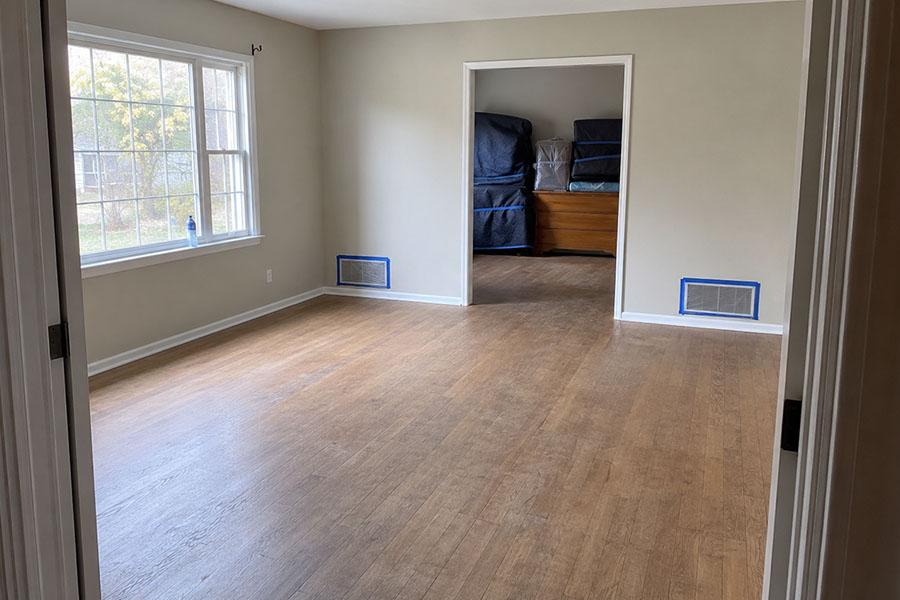
Close the supply vents in the rooms being worked on. Cover the return air vent if it’s in or near the work area. Fine dust from thinset or adhesive will travel through an open system and show up in rooms you thought were protected.
Change the filter before the job starts. You’ll want to change it again afterward. Keeping the system running (especially in warmer months) helps the crew and the containment, but only if the vents in the work zone are handled first.
The day before is for the final pass
Walk the rooms one more time. Anything still on the floor or low shelves comes out. Create a clear path from the entry the crew will use to the work area. They’ll be bringing equipment in and debris out. Narrow, cluttered hallways slow everything down.
If appliances sit in the removal zone (refrigerator, range, washer), confirm whether they need to be pulled or simply protected. Most professional crews will handle basic protection, but the cleaner the starting point, the less time gets spent on setup.
Leave a couple of bottles of water out or make sure the crew knows they have access. It’s a small thing that keeps the day moving.
Morning of the job
Do a last visual check. Pets secured. Path clear. Vents closed. Nothing sitting on the floor in the work rooms.
That’s it.
You don’t need to build plastic walls or set up industrial containment — that’s the crew’s job when they’re using proper dust-control equipment. Your part is making sure they can start working the moment they walk in instead of spending the first hour rearranging your belongings.
What usually doesn’t help as much as people think
Over-protecting rooms three zones away from the work area.
Leaving furniture in place “just in case they can work around it.”
Waiting until the morning of to decide where the dog will go.
Assuming the crew will empty closets or move heavy pieces without prior discussion.
Those decisions create friction. The useful ones remove it.
A well-prepped house helps the removal stay on schedule. The work area is easier to control, and the next phase of your project can begin without preventable cleanup or access delays.
If your removal date is set and you want the process to stay straightforward, see the complete floor removal process. When you are ready to schedule or want a clear look at timing and scope, request a floor removal quote.