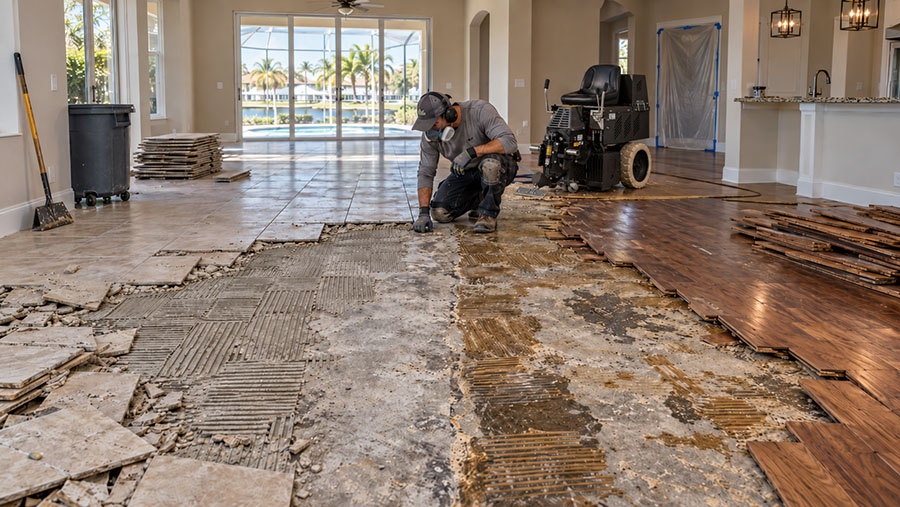
Ceramic tile and glued-down wood removal may seem similar, but they require distinct floor removal plans. Compare the scope, access, waste, debris, and project delivery requirements.
Two rooms can have the same square footage and still need different floor-removal plans.
The reason is simple: the visible surface is only one part of the job. How the material is attached, what remains after it comes up, how the crew reaches the work area, and what the next flooring trade expects all affect the scope.
That is especially true when comparing tile with glue-down wood. Neither material is automatically “easy,” “hard,” fast, or slow based on appearance alone. A useful plan starts with the actual floor assembly and the next step in the project.
The planning difference starts below the surface
Tile is commonly bonded to its substrate with a cement-based setting material such as thinset mortar. The Tile Council of North America explains that thinset is designed to adhere tile to a substrate in a thin layer. That means the removal conversation is not only about lifting the tile; it must also account for the bonded material beneath it and the condition revealed after removal.
Glue-down wood uses an adhesive installation method. National Wood Flooring Association guidance emphasizes that glue-down systems depend on the flooring, adhesive, substrate, and manufacturer requirements. For removal planning, that makes the attachment method and remaining adhesive important project details—not assumptions to make from a room photo alone.
The practical takeaway is straightforward: identify both the visible floor and how it is attached before treating square footage as the whole scope.
What changes when the existing floor is tile?
For a tile-removal conversation, useful starting information includes:
- the rooms and approximate area involved;
- the tile type when known;
- whether the tile is installed over concrete or another substrate;
- visible transitions, changes in elevation, or multiple flooring layers;
- access from the entry point to the work area;
- what the installer or next trade expects to evaluate afterward.
Tile removal can reveal different setting materials, layers, repairs, or substrate conditions. Those conditions should be evaluated after they are exposed rather than promised in advance.
This is why “remove the tile” and “deliver an installation-ready slab” are not automatically the same scope. Central Florida Floor Removal can remove the agreed floor covering, but final slab condition cannot be guaranteed. The flooring installer or responsible next trade should confirm whether additional preparation is required for the planned finish.
What changes when the existing floor is glue-down wood?
For glue-down wood removal, the useful questions shift toward the bond and the material left beneath the boards:
- Is the wood confirmed to be glue-down rather than floating or mechanically fastened?
- Is the installation over concrete or a wood subfloor?
- Are there transitions into tile, carpet, vinyl, or another material?
- Does the project include one room, connected open areas, or several separated spaces?
- What does the next installer require before evaluating the exposed surface?
The condition of the wood, adhesive, substrate, and room layout can change how the project is approached. A photo of the floor is helpful, but close-up images of an edge, transition, threshold, or already exposed section can provide better context.
As with tile, removal does not create a blanket guarantee about the final substrate. The next trade should evaluate the exposed surface against the requirements of the flooring being installed.
A side-by-side planning checklist
| Planning question | Tile | Glue-down wood |
|---|---|---|
| What should be identified first? | Tile type, rooms, substrate when known, transitions, and visible layers | Wood type when known, confirmed attachment method, substrate, transitions, and visible adhesive conditions |
| What may remain after the covering is removed? | Bonded setting material or other layers that require evaluation | Adhesive residue, wood fragments, or other layers that require evaluation |
| What photos are most useful? | Wide room view, close-up of tile, transition or exposed edge, and access path | Wide room view, board close-up, exposed edge or threshold, and access path |
| What should be confirmed before work? | Exact removal areas, access, timing, debris scope, and next-trade expectations | Exact removal areas, attachment method, access, timing, debris scope, and next-trade expectations |
| What should not be assumed? | That every tile assembly or exposed slab will have the same condition | That every adhesive bond or exposed substrate will have the same condition |
The five details Central Florida Floor Removal needs before the job
Whether the floor removal project involves tile, glue-down wood, or both, start with five details:
- Job location or address. Central Florida Floor Removal serves Orlando and the Central Florida service area, with other locations considered case by case.
- Existing floor type. Name the material and attachment method if known; photos can help clarify the conversation.
- Areas to be removed. List the rooms or zones and provide an approximate square footage when available.
- Access and timing. Explain how the crew reaches the work area and when the removal must fit into the larger project.
- What happens next. Identify the planned replacement floor or the next contractor, and share any known handoff requirement.
Customers must remove furniture from the work area and provide access so the agreed service can be completed. Debris removal is an optional add-on. When it is included in the approved scope, Central Florida Floor Removal handles it; when it is not included, the responsibility should be clarified before work begins.
What happens if the exposed conditions change the scope?
Not every condition can be confirmed before the existing flooring is removed.
If Central Florida Floor Removal discovers a new condition or the customer adds an area outside the agreed scope, the condition or added area is photographed. A revised price is then presented to the client for approval before the additional work proceeds.
That change-control step protects the schedule and keeps added work from becoming an undocumented surprise.
At the end of the agreed removal, the assigned job manager normally performs the final tile or wood removal walkthrough. The handoff should clearly identify the job address, floor type, work completed, and timeline so the next person in the project understands what was included.
The best comparison is not “Which material is harder?”
The more useful question is: What does this specific floor require before the next trade can make its decision?
Tile and glue-down wood create different planning conversations, but both benefit from the same discipline: identify the material, confirm the scope, document access and timing, clarify debris responsibility, and avoid promising an unseen substrate condition.
If you are planning a floor removal in Central Florida, request a quote online and send photos of the rooms, flooring close-ups, transitions, and access path with the project location and approximate area. Central Florida Floor Removal can use those details to begin a scoped conversation about the work.
Frequently asked questions
Is tile removal always more difficult than glue-down wood removal?
No. The floor assembly, bond, layers, substrate, access, layout, and next-step requirements all matter. The material name alone is not enough to rank one project as easier or harder.
Can Central Florida Floor Removal tell what is underneath from a photo?
Photos help identify visible material, transitions, access, and exposed edges, but they cannot confirm every concealed condition. Conditions discovered after removal should be evaluated and documented.
Does removal guarantee that the slab is ready for new flooring?
No. Final slab condition cannot be guaranteed. The exposed surface must be evaluated against the requirements of the flooring being installed, and additional preparation may fall outside the removal scope.
Is debris removal automatically included?
No. Debris removal is an optional add-on. Central Florida Floor Removal handles it when it is included in the approved project scope.
What happens if an extra room is added after the job starts?
The added area is documented and photographed, and a revised price is presented for client approval before the additional work proceeds.
What should I send when requesting a quote?
Send the project location, existing floor type, approximate area or room count, photos of the rooms and transitions, access information, desired timing, and what is planned after removal.